Structural integrity is the ability of all constituent parts of an aircraft’s structure to withstand normal operating loads within approved flight limitations without collapse or unacceptable deformation. Management of aircraft structural integrity (ASI) is required within the operating organisation to ensure that aircraft, which the State has airworthiness responsibility, can operate safely and economically throughout their service life.
Aircraft structures deteriorate from their initial `as manufactured´ condition throughout their service life. There are many reasons for this deterioration; of which fatigue, corrosion, degradation due to environmental factors and accidental or battle damage are significant for military aircraft. Both the aircraft’s operational environment and its actual usage are important factors in determining the rate of this deterioration. This deterioration reduces the ability of aircraft structures to withstand the loads for which they were originally designed and inevitably lead to the retirement of these structures from service for safety or economic reasons.
To maintain airworthiness requires constant vigilance. Lessons from past accidents and incidents should never be forgotten. It is normal and appropriate for the aircraft’ manufacturer to define the ASI management plan for the prescribed life of type. However, it is prudent that the State or operator maintain a high level of ASI competency. This ensures a sovereign capability, some independence from the manufacturer and an ability to question that manufacture’s processes, assumptions and costs. Also, in some cases, the life of type may need to be extended due to delays in acquiring new assets or simply the cost barrier of the new aircraft.
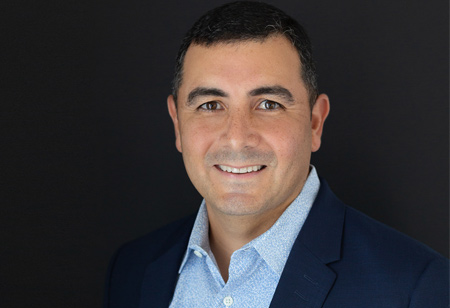
Molent Aerostructures consulting can help build and maintain a sovereign ASI capability. The Director, Mr. Molent has over 36 years experience in the role of an airworthiness engineer/scientist. In addition to providing high-level advice on through life structural airworthiness to the Royal Australian Air Force for a range of aircraft (including the F-35, F/A-18, F-111, PC9 and P3-C Orion), Loris has been attached to both the (then) Australian Civil Aviation Department (1985) and the US Navy (NAVAIR, 1990-1991) in Washington D.C. as an airworthiness engineer. With the US Navy Loris had airworthiness management responsibilities for the F/A-18 fleet as well as the X-31 Enhanced Manoeuvrability Fighter Aircraft.
Up to 2020 Loris was the Head of Emerging Aircraft Structural Integrity at Defence Science and Technology Group, Australia. He was presented with the Minister’s Award for Scientific Achievement in 2010, an Order of Australia Medal in 2016 (for significant contributions to aeronautical engineering) and the USAF’s Jack Lincoln award in 2025 (in recognition of dedicated service and significant contributions to the advancement in aircraft structural integrity).
-
The focus has always been on practical outcomes, applying innovative methods to real aircraft fatigue, failure and structural challenges.
Today, that depth of experience underpins his consultancy and training practice, focused on advancing aircraft structural integrity through specialized advisory services and education. Reflecting this contribution, Molent was named among APAC’s Top Aircraft Structural Integrity Training and Advisory Providers in 2026.
“The focus has always been on practical outcomes, applying innovative methods to real aircraft fatigue, failure and structural challenges,” says Molent.
Some of this airworthiness advice included the estimation of airframe service lives due to metal fatigue, the structural assessment and review of airworthiness certification basis of new aircraft types, conduct and interpretation of major full-scale airframe test programs leading to in-service modification programs, structural recovery programs subsequent to aircraft accidents and the development of holistic total life risk of structural failure techniques. Notably Loris’ team helped extend the service life of the RAAF F/A-18 and F111 by over ten years.
Loris has been involved with the development and application of advanced bonded repairs. Some significant applications included the reinforcement of the RAAF’s F111 wing pivot fitting and the design of USAF’s C141 wing weep-hole reinforcement. The later helped the USAF bridge the gap between the C141 and C17. Loris’ team also applied several bonded reinforcements to the Boeing 747 fuselage fatigue test article.
Molent’s courses are structured around methods developed through fatigue testing and accident investigation. The curriculum covers aircraft structural failure analysis and prevention, structural integrity familiarization for aircraft and engines, full-scale fatigue design and testing of military aircraft and the structural aspects of accident investigation. Across all courses, conventional, theory-heavy instruction is kept to a minimum. The emphasis is on applying proven methods to real aircraft problems. Each course is tailored to meet the specific requirements of the client. Clients have included Air Forces from Spain, India, Malaysia, Swiss and Finland.
He runs his training sessions as five-day workshops rather than traditional lectures, with active participation encouraged throughout. Attendees bring current challenges into the sessions for discussion and to identify ways forward. The materials are slide-based and supported by real-world failed components that connect analysis with physical outcomes.